
The Power of Trust: Inside a CHADS Mentor’s Award-Winning Work With Students
January is National Mentoring Month, a time to recognize the adults who show up every day for young people - not just as educators or support staff, but as trusted adults during some of the most formative years of life. At CHADS Coalition for Mental Health, mentorship is at the heart of our work, and few embody that mission more clearly than Jacob, a Social Emotional Wellbeing (SEW) Learning Coach at Lucas Crossing Middle School.
For Jacob, mentorship begins with trust.
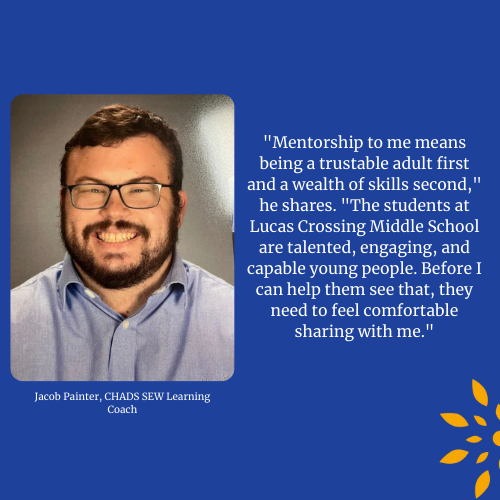
"Mentorship to me means being a trustable adult first and a wealth of skills second," he shares. "The students at Lucas Crossing Middle School are talented, engaging, and capable young people. Before I can help them see that, they need to feel comfortable sharing with me.”
That foundation of trust allows meaningful growth, whether it's goal-setting, emotional regulation, or learning to navigate challenges both inside and outside the classroom. Jacob's approach reflects CHADS' belief that social-emotional wellbeing is essential to student success, especially during the middle school years.
Showing Up
Being a mentor goes far beyond simply being present in a building. For Jacob, "showing up" means caring for his own mental health so he can fully support his students.
"Burnout is real," he says. "I take time to engage in activities that fill my cup so I can pour into others. As a mentor, I work on supporting my own mental health, too."
He creates spaces where students can feel through music, games, conversation, and lessons shaped around their interests. Showing up, he explains, means truly seeing students when they walk through the door.
Building Trust One Connection at a Time
Middle school can be overwhelming, especially for students who feel guarded or unsure of adults. Jacob builds trust by finding common ground—sports, hobbies, shared feelings of being left out, or even being a night owl. He also models vulnerability, often drawing from his own middle school experiences.
"Kids want to know we're human just like them," he says.
From soft lighting to pillows in his office, every detail is intentional. The environment communicates safety before a single word is spoken.
The Power of Consistency
Consistency is one of the most powerful tools a mentor can offer. Jacob has seen firsthand how students who once avoided him now seek him out simply because he kept showing up.
"Kids notice our habits more than we think," he says. "They also hold us accountable."
By following through on his commitments, Jacob teaches students what reliability looks like—an essential component of healthy relationships and emotional security.
When Mentorship Comes Full Circle
One of the moments that reminded Jacob why mentorship matters most happened quietly. A student he mentored—who once struggled with emotional regulation—was seen coaching a peer through big emotions, step by step.
"A student I mentored became a mentor," Jacob says. "Nothing beats that."
That ripple effect is precisely what CHADS strives to create in schools.
Honoring Impact: The Compass Award
Jacob was recently honored with the Compass Award from the Community Impact Network, a recognition he views not as a personal achievement, but as a reflection of collective effort.
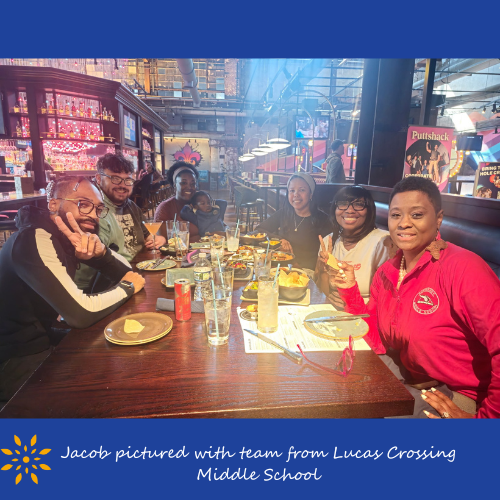
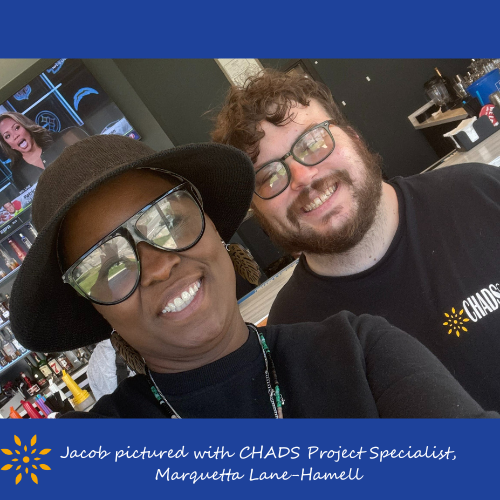
"This award represents the community I work with," he shares. "Growing up is hard. Growing up without support is harder. In my time at Lucas Crossing, I’ve met a whole community of people who show up every day with care and consistency. I see my Compass Award as a reflection of that collective effort—not just my own. That includes Marquetta Lane-Hamell, a fellow CHADS Project Specialist, and Kizzy Covington (7th grade), Jalen Jones (6th grade), and Darius Riddle (8th grade)—Family Engagement Liaisons with Beyond Housing who provide critical social emotional learning support to students and families. We all share the same goal: to make a real difference in the 24:1 community. To know that, in my short time here, I’ve already contributed in some meaningful way is truly a blessing.”
The recognition highlights the growing understanding that school-based mentors play a critical role in youth mental health, impacting not only students but also families and entire communities.
Why CHADS Mentorship Matters
What sets CHADS apart, Jacob says, is the balance of structure and flexibility.
"We have a consistent curriculum, but the flexibility to meet students where they are," he explains. "CHADS acknowledges the importance of identity in the students and grows alongside the child."
As we recognize National Mentoring Month, Jacob offers a simple but powerful reminder:
"Mentors are vital. Mentors are everywhere. It doesn't take a title to uplift the youth of our communities."
At CHADS, that's precisely what mentorship is about—and exactly why it matters. For more information or to learn how to get a CHADS mentor for your school, contact Colleen Suber at colleen@chadscoaltiion.org.